

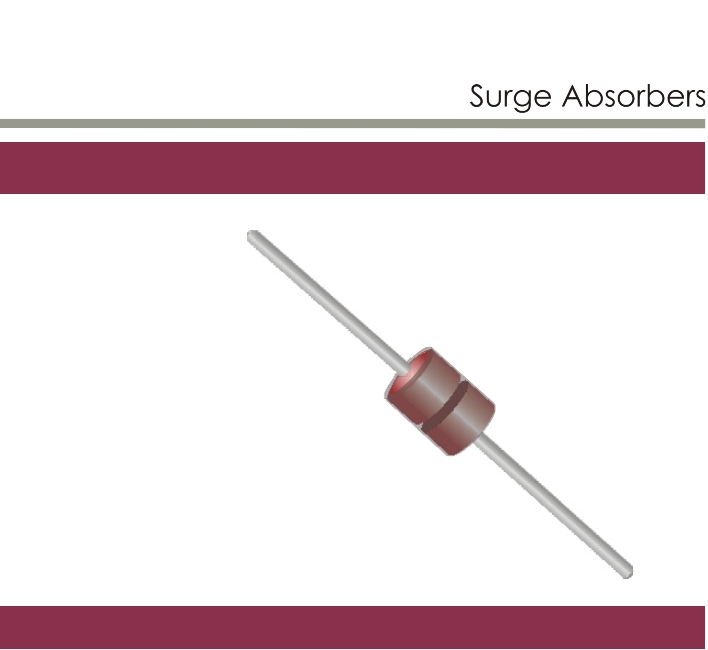
We are the solution provider for SPD up to 20kv , we have three types of SPD (surege protective devices). Right now we introducing a low cost Solution .
A Superior Protection of Power Supplies with MOV (metal oxide variastor) + Spark Gap
Combination.
Features of the Varistor + Spark Gap Series Combination
-Lower Clamping Voltage
-No Thermal Runaway
-No Leakage Current at steady state operating conditions
-Longer Life
-Extremely Low Capacitance
-High Insulation Resistance
Stability Against Repeated Surges.
-Low Cost Solution.
Introduction
Current and Voltage Surges on AC Power Lines are responsible for most failures of electronic
appliances and equipment. The Power Supply section of the equipment faces the brunt of
these power line disturbances.
High Voltage Spikes are often too quick (short duration, high frequency) for protection
devices to act and cause breakdowns in Bridge Rectifiers and/or STRs. Higher Energy Surges
(longer duration or with heavier current component) progressively damage other (generally
robust) components as the Mains Filter Capacitor.
Power Supply Designers pay special attention to controlling the menace of Power Line
Disturbances by using components as Metal Oxide Varistors, Line Inductors, In–rush current
Limiters etc. Each component serves a different purpose. This Application Note will limit
the discussion to the advantages vs disadvantages of using Metal Oxide Varistors.
Metal Oxide Varistors (MOV)
Varistors, as the name suggest are variable resistors and the internal impedance depends on
the potential applied across them. A suitably chosen Varistor, under normal operation should
exhibit a very high impedance and thus permit negligible Leakage Current. As the potential
across the Varistor rises beyond the Varistor Voltage the impedance should fall rapidly and
should ideally become independent of the current flowing through it and by inference clamp
the potential across itself to ONE specified value. Once the externally applied potential
across the Varistor recedes to less than the Varistor voltage the Impedance should rise again
towards the original High level and once again prevent flow of current through the Varistor.
In this manner the Varistor acts like a conditional shunt and is applied in a parallel
configuration to the Power Supply.
However, as all components, Varistors do not exhibit ideal behavior and are prone to the
following problems.
a) High Clamping Voltage
b) Thermal Runaway
c) High Capacitance
d) Finite Impedance in SHUNT mode
e) Significant Leakage current in OPEN mode.
Due to the above mentioned problems designers using Varistors face a trade-off in
choosing the protection level (measured in terms of the manufacturer specified
Clamping Voltage Level) and the protection life (usually determined empirically according to nature of the equipment being protected and the surge environment
where the equipment is likely to be used).
In India, for 240 Vrms, 50 Hz supply, experts recommend the use of atleast a 14mm
dia Varistor with an AC rating of 470 Vrms. However, this is rarely used as such a
rating implies an unacceptably high Clamping Voltage level. In other words, the
above suggested rating offers a low protection level. On the other hand if a lower AC
rms rating is chosen the protection life is compromised. Power Supply designers in
India frequently use an AC rms rating of 300Vrms which gives a Manufacturer
specified Clamping Voltage level of about 800V at a surge current of 50A (8x20ms pulse). Whether this level is adequate or not is for the designer to determine.
Design Imperative
LG electronics has chosen to use a Varistor with an AC rating of 395 Vrms (Varistor
Voltage is 620 V). The Manufacturer specifies a Clamping Voltage level of 1020V at
a surge current of 50A (8x20ms). It is desirable to reduce this Clamping voltage
Level to as LOW a value as possible. A safer level of about 800V at the same Surge
Current Specification is likely to improve protection levels but care must also be
taken to not compromise on the Protection Life offered by the lower rated Varistor.
Series combinations of Fast acting Spark Gaps and MOVs have proved to be useful in
resolving this trade-off between Protection Level and Protection Life. Such a solution
is hampered by the quality of Spark gaps available thus far – all Spark gap
technologies have so far not been able to offer the required Fast Response Time and
the Surge Current Capacity needed for the above mentioned application at a
reasonable cost.
Designers have tried to use AIR GAPS which are cheap but suffer from poor
Response Time and are hence not effective. Other Ceramic Tube based Spark Gaps
cannot offer the SURGE CURRENT CAPACITY required in this application. GD
Tubes which can offer a high Surge Current Capacity have a poor response time and
are also very expensive.
Punsumi’s own PTB series can respond to Surges quickly but cannot offer the Surge
Current Capacity required for this application. The Engineers at Punsumi have now
developed the new PTC series – which can Shunt heavy levels of Surge Current and can do so repeatedly.When used in series with Varistors the PTC can be used as a Voltage Dependent
Switch which allows conduction of current through itself and the Varistor only if a
surge energizes it. In the process the Clamping Voltage Level of the PTC itself is less
than 30V which is negligible in the context of this application. As a corollary, in the
INACTIVE state, when the Insulation Resistance of the PTC is very high only very
miniscule current is allowed through (in Pico Amperes) thus preventing flow of
current through the Varistor and prolonging its protection life.
In other words, when used in series with the PTC the Varistor Voltage can be reduced
to improve the Protection Level without compromising the Protection Life.